



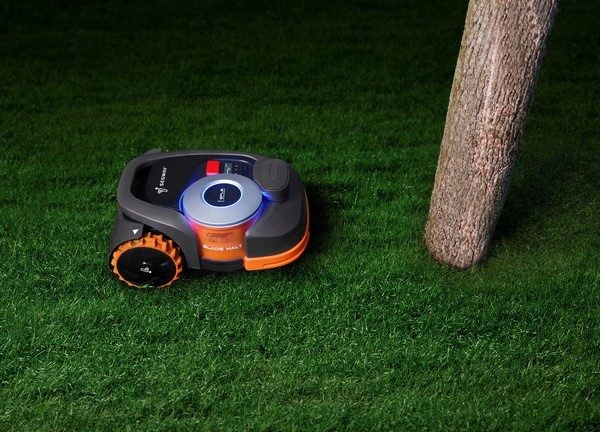
Robot lawnmowers: technology, autonomy and a perfect lawn without the effort
Lawn care is going through a genuine technological revolution. Only a few years ago the robot lawnmower was seen as a product for technology enthusiasts; today it is one of the most interesting solutions for anyone who wants a well-kept lawn while drastically cutting the time spent on maintenance.
The latest robot lawnmowers no longer simply move about the garden at random. Thanks to satellite systems, artificial intelligence, cameras, sensors and LiDAR, the most advanced machines are able to learn the ground, recognise obstacles and plan their work with ever greater precision.
From the boundary wire to the virtual garden
One of the most important changes concerns installation.
For many years robot lawnmowers depended on a perimeter wire laid along the edges of the lawn. That solution is still perfectly valid, but many robots are now able to work using virtual boundaries instead.
RTK and GNSS technologies make it possible to determine the machine’s position with great accuracy and to create the working zones directly from an app. Professional RTK-based systems can reach accuracies of just a few centimetres.
That means working areas can be changed more easily, zones can be excluded temporarily, or the garden can be divided into sectors with different programmes.
Artificial intelligence and obstacle recognition
Satellite navigation is only part of the story.
Cameras and AI-based vision systems allow the most advanced robots to identify many of the objects on the lawn and adapt their route accordingly.
Toys, garden tools, animals and other obstacles can be recognised before contact, increasing the machine’s autonomy and making navigation far more intelligent.
Some systems also combine LiDAR, AI cameras and three-dimensional sensors to build extremely detailed maps of the garden. There are already robots able to use 360° LiDAR and machine vision to navigate accurately even where the satellite signal may be less effective.
A robot that knows its own garden
The concept is therefore changing.
We no longer simply have a machine that cuts grass, but a device able to build and use a genuine digital map of the garden.
From a smartphone, and depending on the model, it is possible to:
- create and edit cutting zones;
- set working days and times;
- set different cutting heights;
- exclude particular areas;
- check the robot’s status;
- change the programmes according to what the lawn needs;
- manage several zones with different settings.
The owner therefore stays in control, while the day-to-day work is handed over to the machine.
Why buy a robot lawnmower?
The first reason is probably also the most important: time.
Mowing a medium or large lawn regularly can take several hours every month. The robot turns that job into an automatic process.
But the advantage is not only about convenience.
A consistently well-kept lawn
The robot does not wait for the grass to grow long before stepping in. It can cut frequently, removing only a small part of each blade.
The result is a lawn that looks more even and tidy throughout the season.
No grass to collect after every cut
The small clippings produced by frequent cutting generally stay on the ground. There is no need to keep emptying a collection bag or to deal with large quantities of cut grass.
More free time
This is probably the benefit owners appreciate most after buying one.
While the robot works, the owner can get on with something else. The lawn keeps being maintained during the week without having to schedule a manual mowing session each time.
Quiet running and electric power
Robots use battery-powered electric motors and are generally far quieter than traditional petrol machines.
When the battery reaches a set level, the machine returns automatically to its charging station and then goes back to work.
Difficult ground is increasingly within reach too
Another big step forward concerns mobility.
There are now robots designed to handle complex lawns, uneven ground and significant slopes. All-wheel drive systems, independent wheel control and advanced algorithms allow some models to reach areas that would have been very difficult for a robot only a few years ago.
The choice still has to be made carefully, though: lawn size, slopes, narrow passages, trees, walls and obstacles remain key factors in identifying the right model.
Not all robot lawnmowers are the same
The available technology has grown quickly, and for that very reason it is important not to choose on the basis of the surface area quoted by the manufacturer alone.
Before buying, you should above all assess the size and shape of the garden, the maximum slope, the number of zones, the presence of narrow passages, the navigation system, obstacle recognition capability and the installation method.
With satellite systems it is also important to consider the shape of the garden: dense trees, buildings and walls can affect GNSS reception. That is why some manufacturers now combine satellite navigation with machine vision, while others adopt LiDAR technology.
The future of lawn care is already here
The robot lawnmower is following the same path we have already seen in many other sectors: automation, artificial intelligence and connectivity are replacing a growing share of manual work.
RTK, satellite navigation, LiDAR, cameras, artificial intelligence and increasingly complete apps are turning these products into autonomous machines able to adapt to the garden.
Buying a robot lawnmower therefore means much more than avoiding mowing the grass by hand.
It means choosing more free time, greater consistency in lawn care and a technology able to work in our place every day.
And we are probably only at the beginning: the next generation of robots will be even more autonomous, more accurate and better able to understand the environment around it.