



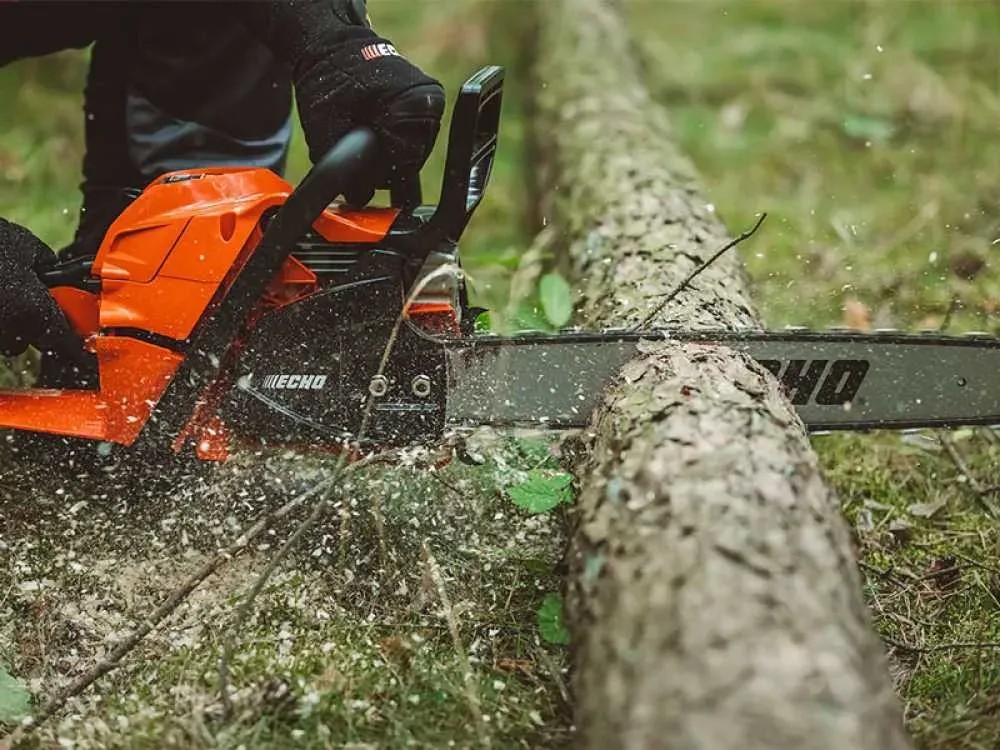
Choosing the right chainsaw means carefully evaluating the type of work to be carried out, how frequently it will be used and the size of the wood to be cut. There are many different models available on the market, designed for occasional pruning, preparing firewood or more demanding forestry work.
Let's take a look at the main aspects to consider before making a purchase.
What will you use it for?
The first factor to consider is the *type of work* you intend to carry out.
For small garden maintenance tasks, cutting branches and light pruning, a compact and easy-to-handle chainsaw may be sufficient.
For cutting firewood or felling small to medium-sized trees, it is advisable to choose a more powerful machine with a guide bar suitable for the diameter of the logs.
Those who frequently use a chainsaw for agricultural, forestry or professional work should opt for models designed to ensure high performance, durability and reliability, even during prolonged use.
Battery-powered, electric or petrol chainsaw?
One of the main differences between chainsaws is their power source.
Battery-powered chainsaw
Modern battery-powered chainsaws are becoming increasingly popular thanks to their practicality.
They offer several advantages:
- Instant starting;
- Reduced noise levels;
- No exhaust emissions during operation;
- Low maintenance requirements;
- Generally lightweight design.
They are particularly suitable for garden maintenance, pruning and domestic tasks. Higher-performance models can also be used for more demanding applications.
Electric chainsaw
Corded electric chainsaws are a practical solution for those who mainly work near their home or in areas where a power outlet is available.
They are generally lightweight, quiet and require little maintenance, but the power cable limits freedom of movement.
Petrol chainsaw
Petrol chainsaws remain one of the most widely used solutions when high power, autonomy and performance are required.
They are particularly suitable for:
- Cutting firewood;
- Tree felling;
- Agricultural work;
- Maintenance of large properties;
- Forestry and professional applications.
In this case, it is important to choose the correct engine displacement, power output and guide bar length.
Guide bar length
The guide bar largely determines the size of wood that a chainsaw can comfortably handle.
As a general guideline:
Short guide bars: ideal for pruning and cutting small branches;
Medium guide bars: suitable for general maintenance and preparing firewood;
Long guide bars: designed for larger logs and more demanding tasks.
A longer guide bar is not always the best choice. A more compact chainsaw can be much more practical, lightweight and precise when the job does not require a large cutting capacity.
Power and engine displacement
For petrol chainsaws, engine displacement directly influences the machine's performance.
For smaller tasks, a lightweight chainsaw that is easy to control is preferable. For felling trees and cutting large logs, greater power is required.
Finding the right balance is essential: choosing a machine that is excessively powerful for your needs can result in additional weight and fuel consumption without providing any real advantages during operation.
Weight and ergonomics
A chainsaw must be powerful, but it should also be comfortable to use.
Weight, handle design, weight distribution and the anti-vibration system can make a significant difference, especially during prolonged work sessions.
A well-balanced machine allows greater precision and reduces operator fatigue.
For pruning and working in difficult positions, low weight is often one of the most important selection criteria.
Safety
A chainsaw is a machine that requires attention and proper training.
When choosing a model, it is important to check for safety features such as:
Chain brake;
Hand guard;
Anti-vibration system;
Throttle lockout;
Practical and easily accessible chain tensioner.
During operation, it is also essential to wear appropriate personal protective equipment, including gloves, a helmet with a visor, hearing protection, chainsaw protective trousers and suitable footwear.
Maintenance and spare parts also make a difference
A good chainsaw should remain efficient over time.
Before purchasing, it is therefore useful to consider the availability of:
Chains;
Guide bars;
Filters;
Spark plugs;
Genuine spare parts;
Technical assistance.
Choosing reliable brands and models for which spare parts and consumables are readily available allows you to use the machine for longer and reduce potential downtime.
Which chainsaw should you choose?
There is no single perfect chainsaw for everyone.
Those who need to carry out small maintenance tasks can prioritise lightweight design and ease of use, choosing a battery-powered model, for example.
For frequent firewood cutting and more demanding tasks, a medium-powered petrol chainsaw may be preferable.
For professional use, it is essential to choose a machine designed to deliver high performance, durability and long-term reliability.
The best choice therefore comes from finding the right balance between power, weight, guide bar length, frequency of use and type of work.
Carefully evaluating these factors allows you to purchase a chainsaw that truly meets your needs, making your work more efficient, comfortable and safe.